-
Why I Have The Hilton Aspire Card
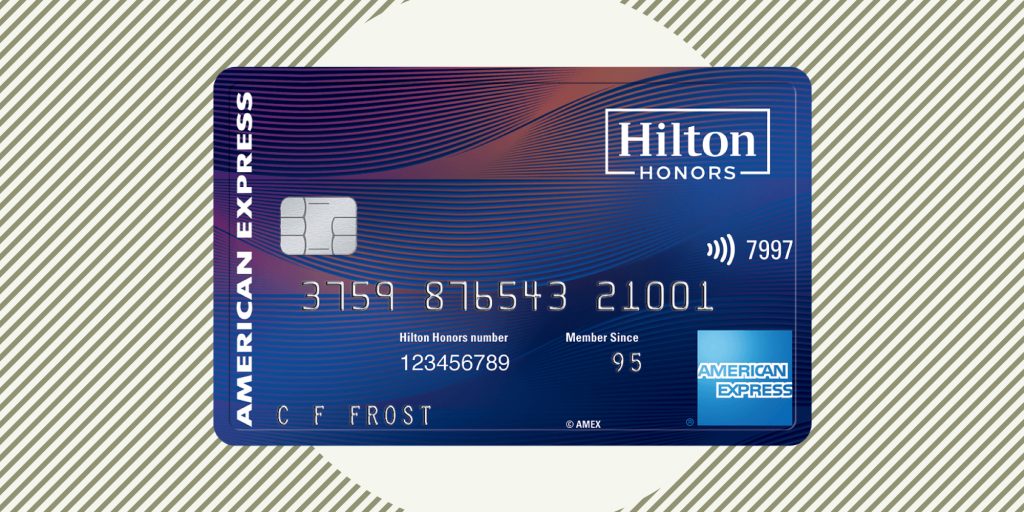
via time.com In return for the $450 annual fee, the Aspire offers a ton of different credits and perks to choose from:
- $250 airline fee credit
- $250 Hilton credit
- Diamond status with Hilton
- Up to two weekend reward nights; one weekend night at almost any Hilton property worldwide after opening your account and on your cardmember anniversary each year, plus a second weekend night when you spend $60,000 on the card in a calendar year
- Priority Pass membership that includes access to over 1,400 airport lounges
- $100 property credits when you book at least a two night stay at Waldorf Astoria or Conrad properties using hiltonhonorsaspirecard.com
- 34 total points per dollar for Hilton hotels (14 from the Aspire card + 20 points/dollar from Hilton Diamond status, which offers 100% bonus on the usual 10 points/dollar), 7 points/dollar on flights, rental cars, and US restaurants, 3 points everywhere else
Diamond Benefits
The Diamond status with Hilton also offer serious benefits like 34 points/dollar spent at Hilton when you use the Aspire card (which is worth roughly 17% based on a conservative .5¢ valuation), room upgrades up to a one-bedroom suite, executive lounge access for you and another guest, late checkout, free breakfast, and 5th night free when you book a stay using entirely rewards points.
If you stay in a Hilton hotel at least once a year and use both the Hilton credit and the airline fee credit, you can potentially recoup the annual fee from that alone, and then you get Diamond status for free, plus a free night certificate.
The airline fee credit can be tricky because you have to choose the airline that you want to use it for each year, so you are tied to one airline if you want to use the full credit. However, if you are traveling with a group or check bags frequently, you can get the most out of that credit fairly easily. If you fly Delta, you can also use the credit towards tickets if you pay for part of the ticket with a gift card or points, and if you fly United, you can often get the credit to cover Travel Bank purchases. Other ways that you can use the credit include:
- Checked baggage fees (including overweight/oversize)
- Itinerary change fees
- Phone reservation fees
- FareLock
- Pet flight fees
- Seat assignment fees (E+)
- In-flight amenity fees (beverages, food, pillows/blankets, headphones)
- In-flight entertainment fees (excluding wireless internet unless it is billed by the airline, which it often is not.)
- Airport lounge day passes & annual memberships
The Priority Pass lounges offer things like complimentary food and beverages, comfortable seating, and showers. If you are flying through airports that offer these lounges, they can offer huge benefits. (click here to see if your airport offers lounge access).
The Conrad/Waldorf Astoria credit should be taken with a grain of salt because some of the time, booking through the Aspire portal raises the rate, so you’ll have to check it on a case-by-case basis. Conrad and Waldorf Astoria stays are also on the pricier side, so it may not be very applicable to you if you prefer cheaper hotels.
Overall, the Hilton Aspire offers a great value if you stay in a Hilton at least once a year. The Hilton and airline fee credits cover the annual fee relatively easily and without many hoops to jump through, and the free night certificate and Diamond status add some serious bang for your buck. If you aren’t as tied to Hilton, you can get similar perks from the Amex Platinum (gold status with Hilton, a $200 airline voucher, airport lounge access, 5 Amex points, which equals 10 Hilton points if you transfer from Amex to Hilton). However, because of how much value you can get from the Aspire card, I personally have both cards and plan to do so for the foreseeable future.
*As a bonus, earn 150,000 Hilton Honors Bonus Points after using your Hilton Honors American Express Aspire Card to make $4,000 in purchases within the first 3 months of Card Membership.*
-
Why We Lift
Many of the people who I have trained have strong feelings (pun absolutely intended) about weight (resistance) training and building muscle. Some people are worried about getting injured, others are worried that they are going to end up looking like the Hulk. Other people lift weights religiously but have an impossible time trying to build muscle. Almost all of these people, regardless of their views, worry that they don’t know enough about weight training and get overwhelmed by all of the information that is out there about it. So what should you do?
It depends on your goals, but almost everyone (sport-specific athletes aside), will benefit from doing a little bit of everything.
Why?
Because our muscles serve so many different purposes. They allow us to, among other things, walk and run, carry heavy things, keep all of our bones and joints in place, and they help us look good when we’re naked (that toned look that everyone wants is a mix of being lean and being muscular). Doing all of these things requires you to train in different ways. Training to move heavy things for a short amount of time is different from training to carry lighter things for a longer amount of time, and training to get big muscles is different from training to get strong muscles.
Resistance training may sound complicated; however, there are a few key principles and exercises that will serve as your bread and butter and will get you to where you want to be.
-
Instagram vs Reality
It is important to recognize that many of the super-muscular fitness models and Instagram influencers, both men and women, are on/ have taken steroids. Some of them, such as Noel Deyzel and Larry Wheels, are quite open and talk frequently about their steroid use. Others, such as Dwayne Johnson, have admitted it but don’t talk about it much.

Noel Deyzel via ladbible.com I am not advocating for steroid use at all; quite the opposite in fact. Steroids can cause a wide variety of serious problems like strokes, blood clots, heart attacks, ruptured tendons, and many other issues. I want to convey the message that it is really difficult to put on large amounts of muscle. I have had a ton of people express that they are either concerned about getting too muscular from doing resistance training, or feeling like a failure because they don’t look anything like their favorite bodybuilder. However, neither person realizes that most of what they’re seeing is a result of steroids. If you are worried about getting bulky from weight lifting, don’t be. On the flip side, if you’re convinced that you’re going to add five inches of muscle to your biceps in a few months, don’t be.
Many people also see that their favorite fitness influencer always looks like they are ready for a magazine shoot. This too is a load of crap. Staying super lean year-round is incredibly difficult, and incredibly taxing for your body. Often times, influencers will film a bunch of content when the weather is warm and they are lean, and then they will spread that out over the course of the year and mix in some content where they are covered up a bit more to give the appearance that their weight never fluctuates. Don’t get me wrong, it’s not like they are going from super lean to morbidly obese. However, your weight is going to fluctuate, and that is normal.
Fitness will best serve you if you focus on trying to be better than you were yesterday. If you show up to the gym and grind out a little bit of progress each day, you will be amazed at how far you go over the course of months, years, and decades. It is both fine and natural to compare yourself to other people a little bit, but you have to keep it within reason. There is always going to be someone in the gym who is stronger, leaner, or bigger than you – and that is a good thing. It helps to open your mind to what you can accomplish, especially when you are similar to that person physically. However, if you get too wrapped up comparing yourself to other people, you’re never going to be happy. The happiest and most successful people I have ever run across in the gym are the ones who focus the most on competing with themselves, not with others.
-
Why I Have The Chase Sapphire Preferred
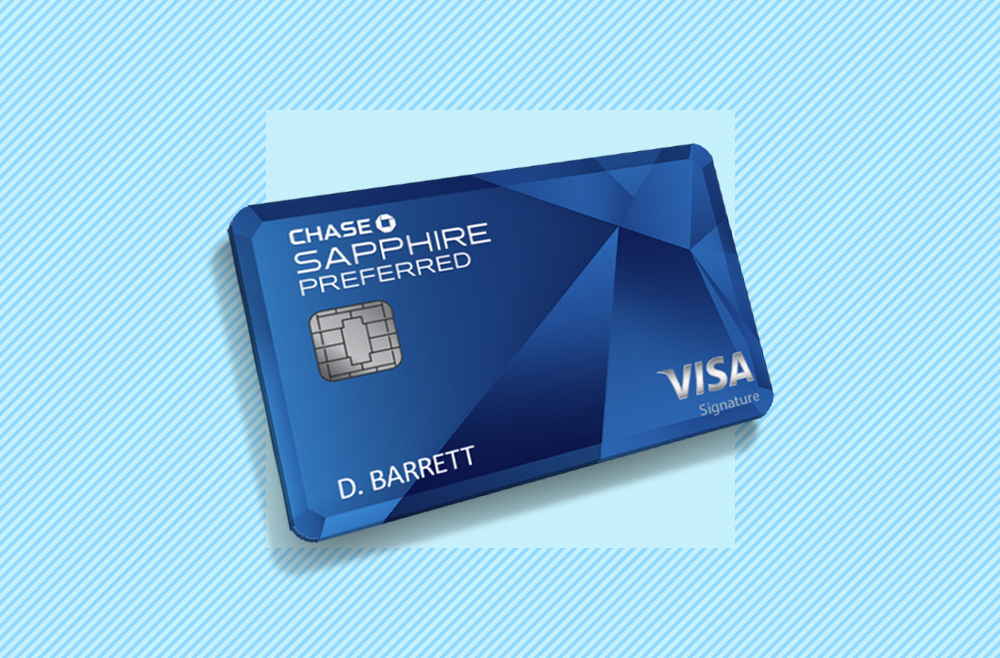
via time.com If you are looking for a card that doubles as a cashback and a travel card, the Chase Sapphire is worth a look.
A $50 in statement credits each account anniversary year for hotel stays purchased through Chase Ultimate Rewards and earnings of:
- 5x total points on travel purchased through Chase Ultimate Rewards, (excludes hotel purchases that qualify for the $50 Annual Ultimate Rewards Hotel Credit).
- 3x points on dining, including eligible delivery services, takeout and dining out.
- 3x points on online grocery purchases (excludes Target, Walmart and wholesale clubs)
- 3x points on select streaming services
- 2x on other travel purchases
- 1 point per dollar spent on all other purchases
Plus, a bonus of 10% of your total purchases made the previous year. That means if you spend $25,000 on purchases, you’ll get 2,500 bonus points.
Points Redemption:
Points can be redeemed for travel either through the Chase Ultimate Rewards portal at 1.25¢ per point or about 1.5¢ through transfer partners such as:
- Aer Lingus, AerClub
- Air Canada Aeroplan
- British Airways Executive Club
- Emirates Skywards®
- Flying Blue AIR FRANCE KLM
- Iberia Plus
- JetBlue TrueBlue
- Singapore Airlines KrisFlyer
- Southwest Airlines Rapid Rewards®
- United MileagePlus®
- Virgin Atlantic Flying Club
- IHG® Rewards Club
- Marriott Bonvoy®
- World of Hyatt®
With Chase Pay Yourself Back, you can also redeem points for cash back at a rate of 1.25¢ on rotating purchase categories. You can also redeem points for gift cards at a rate of 1¢ per point.
While the Sapphire Preferred doesn’t offer as many perks as some of the higher-tier cards like the Amex Platinum or Chase Sapphire Reserve, it does offer greater rewards potential. Using the $50 travel credit effectively lowers the annual fee to $45/year, which is among the lowest that I have seen for a card like this, making this a good option for someone who is looking to rack up points and travel every few years, as opposed to every year. However, what I like the most about the Sapphire Preferred is that unlike most companies, Chase limits the signup bonus to once every 48 months, as opposed to once per lifetime.
If you hold the Sapphire Reserve or Preferred (you can only have one Sapphire card at a time) for 4 years, you can call Chase and ask them to downgrade your card to one of the Chase Freedom cards. You then wait for at least 2 weeks, and then ask them to upgrade your card the your desired Sapphire card, and you can get the intro bonus again. And again. And again.
The Sapphire Preferred offers a good value for the infrequent traveler, especially if you take advantage of the multiple intro offers. If you don’t travel enough to warrant a dedicated travel card or don’t spend enough to warrant a cashback card, the Sapphire Preferred can be a great happy medium.
*Earn 80,000 bonus points after you spend $4,000 on purchases in the first 3 months from account opening.*
-
Why I Have The Capital One Venture X
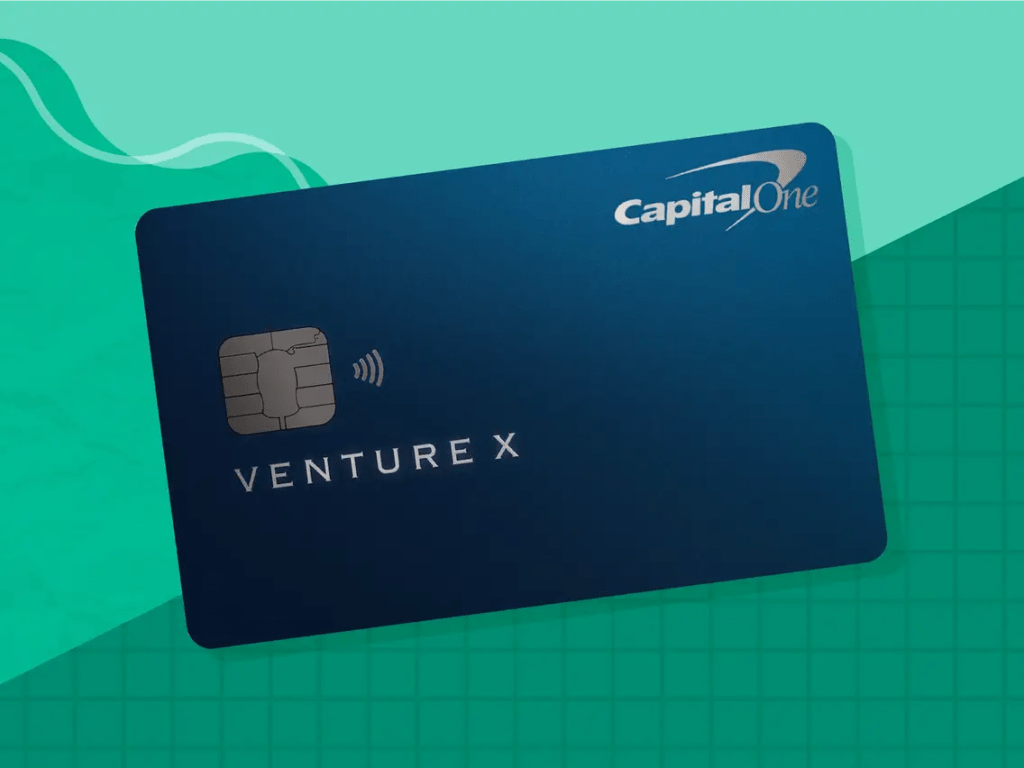
via businessinsider.com If you are looking for a travel card that is a bit less extreme than the Amex Platinum, you have come to the right place. The Venture X from Capital One comes with a large annual fee ($395), but offers a $300 annual credit on travel booked through Capital One Travel and a 10,000 mile anniversary every year when your card renews. These miles can be redeemed for a variety of things, ranging from gift cards and statement credits to sporting events and concerts to travel, either through Capital One or their numerous transfer partners. The Venture X also offers a free Global Entry or TSA PreCheck membership and access to Capital One lounges and a Priority Pass membership, which includes access to roughly 1,300 lounges around the world.
The Venture X earns 10 miles/dollar on hotels and rental cars booked through Capital One Travel, 5 miles/dollar on flights booked through Capital One Travel, and 2 miles/dollar everywhere else.
One of the big strengths that the Venture X offers is its versatility. The $300 credit can be used for a variety of different things through Capital One Travel, so it is pretty easy to use it each year. Miles can also be redeemed for things like Airbnb, Lyft/Uber, and Disney tickets at $0.01/mile if that’s more your speed than some of the other redemption options. The 2 miles/dollar for everyday purchases is also the best rate that I have found for a travel card. Because of the 2 miles/dollar, combined with how easy it is to cover the annual fee with the credit and annual miles bonus and the lounge assess that is included, I actually have both the Amex Platinum and the Venture X, despite the overlap between the two cards, and I love them both. The Platinum offers a ton of potential value if you make use of all of the benefits, but is more geared towards high end travel. The the Venture X doesn’t offer as many perks, but the annual fee is much easier to recoup for the non-luxury traveler, the mileage redemption options offer a lot more flexibility, and it offers 2x as many miles on everyday purchases and hotels as the Platinum.
*Earn 75,000 bonus miles once you spend $4,000 on purchases within the first 3 months from account opening.*
-
Why I Have The American Express Gold Card

via americanexpress.com The 4 points per dollar on groceries and restaurants that the Amex Gold card offers make it one of my go-to cards. It also offers a $10/month Uber credit and another $10/month credit for Grubhub, Seamless, The Cheesecake Factory, Ruth’s Chris Steak House, Boxed, and Shake Shack, as well a $100 airline fee credit. The $250 annual fee is steep, but if you make use of the credits every year, the annual fee becomes a non-factor. I live in a small town that doesn’t have a booming Uber/Grubhub market, but I am able to use the credits every month for takeout from some of the local places, as well as chains like Dunkin Donuts.
The 3x points on flights are not the best that are available, but are a nice bonus if you don’t travel enough to warrant a dedicated travel card like the Amex Platinum or the Venture X from Capital One.
Additionally, Amex accounts include split and send, which allows you to link your Amex account to Venmo so that you can easily split a bill with your friends. (I may or may not have racked up an ungodly amount of Amex points by putting group dinners on my card and having everyone pay me back).
If you spend a decent amount of money on restaurants and groceries and can make use of the credits, it is worth taking a look at the Amex Gold.
*As a bonus, earn 60,000 Membership Rewards points after using your new Card to make $4,000 in purchases within your first 6 months of Card Membership. Plus, for a limited time if you apply for this Card by 06/08, you can receive 20% back as a statement credit on purchases made at restaurants worldwide up to $250 back during the first 12 months of Card Membership.*
-
Why I Have The Bilt Rewards Card

via businessinsider.com Bilt recently announced that their credit card rewards program has added rent as one of the rewards categories and that rent can be paid fee-free on the card. This is huge news because most cards charge a fee for rent payments made on the card. Users can get 1 point per dollar spent on rent, 2 points per dollar on travel, and 3 points per dollar on dining. If you are someone who spends most of your money on thee three categories, there is substantial reward potential.
Points can be redeemed with many travel partners, including:
- American Airlines AAdvantage
- Air Canada Aeroplan
- Air France/KLM Flying Blue
- Cathay Pacific Asia Miles
- Emirates Skywards
- Hawaiian Airlines HawaiianMiles
- IHG Rewards Club
- Turkish Miles & Smiles
- United MileagePlus
- World of Hyatt
- Virgin Atlantic Flying Club
In addition, you can redeem points at fitness companies like SoulCycle, so if you are wishing that you had the money to travel more, this could be your answer.
If your landlord doesn’t accept credit cards, Bilt will charge your credit card and send a check on your behalf. They also do not charge a fee for rent payments, unlike most major credit cards.
If you’re paying rent, it is worth looking into the Bilt rewards program. Just be sure to meet the 5 transaction requirement if you want to get your points!
-
Why I Have The American Express Platinum

via americanexpress.com The Amex Platinum: massively overpriced, or an incredible deal?
It depends how much you travel.
The Platinum offers a ton of different credits and perks to choose from:
- $200 airline fee credit
- $200 hotel credit, $100 property credits, and 4th or 5th night free for Amex Fine Hotels and Resorts or The Hotel Collection
- $200 Uber credit ($15/month + an extra $20 in December)
- fee credits for CLEAR and TSA Precheck or Global Entry
- $20/month credit that can be used for Audible, Disney+, The Disney Bundle, ESPN+, Hulu, Peacock, SiriusXM, or The New York Times
- free Walmart+ membership
- $25/month Equinox credit
- two $50 Saks credits (one every six months)
- Gold status with Marriott and Hilton
- access to over 1,400 airport lounges
- 5 points per dollar for flights booked through either the airline or Amex Travel and prepaid hotels booked through Amex Travel
As you can see, there is a lot of potential value from the Platinum card. However, the annual fee is a hefty $695, so those benefits don’t come free.
The hotel credits and free nights are specific to the Amex Fine Hotels and Resorts collection and the Hotel Collection, so these benefits won’t apply to everyone. However, if you stay in these hotels at least a few times per year, you can potentially recoup the annual fee from that alone. The gold status with Hilton and Marriott also offer serious benefits like bonus rewards points, room upgrades, late checkout, food and beverage credits, and 5th night free when you book a stay using entirely rewards points (Hilton only).
The airline fee credit can be tricky because you have to choose the airline that you want to use it for each year, so you are tied to one airline if you want to use the full credit. However, if you are traveling with a group, you can get the most out of that credit in one trip fairly easily.
The lounge access that the Platinum offers is the most extensive of any card that I have encountered (save for the fabled Centurion card). These include the International Amex lounges, Centurion lounges, Priority Pass lounges, and many others. These lounges offer things like complimentary food and beverages, comfortable seating, and showers. If you are flying through airports that offer these lounges, they can offer huge benefits. (click here to see if your airport offers lounge access).
As for the other credits, they are pretty self explanatory; maybe you already use those services, maybe you don’t but you will use them in the future because of the credits, or maybe you won’t use them at all. It is up to you to determine how much value you give these.
If you aren’t big on hotels and flying, the Platinum card probably won’t make a ton of sense for you. However, if you stay in a Hilton or Marriott hotel and fly at least once every year, you can probably get at least enough benefits to break even on the Platinum card, and the more you travel, the more value you get. If you stay in Fine Hotels and Resorts or Hotel Collection hotels, the benefits are even greater.
*As a bonus, earn 100,000 Membership Rewards points after using your new Card to make $6,000 in purchases within your first 6 months of Card Membership. Plus, for a limited time if you apply for this Card by 06/08/2022, you can earn 10x points at restaurants worldwide on up to $25,000 in eligible purchases during the first 6 months of Card Membership.*
-
Billionaires and Taxes Pt. 2: The Only Two Certainties In Life
Many of you have probably read/seen Harry Potter and the Deathly Hallows. For those of you who haven’t or don’t remember the origin story of the deathly hallows, check out the video below.
As we see in the Deathly Hallows, the three brothers each take different paths in life, but in the end, Death gets all of them. The same thing applies to taxes.
While America (and much of the rest of the world) almost exclusively focus on income taxes in tax policy discussion, there are many other taxes out there. Property taxes, capital gains taxes, estate taxes, sales taxes, etc. all contribute tax revenue and are used to shape society in the United States.
The dynamic between billionaires and the IRS often the same as the brothers and Death; You may get taxed sooner, you might get taxed later, or you may get taxed when you die, but in the end, the Tax Man always gets his dues.
Wait? How can you get taxed when you’re dead?
Estate taxes.
Estate taxes are paid when someone dies and passes the things that they owned on to the next generation. We don’t often hear about estate taxes because they only apply to multimillion dollar estates, and although capital gains taxes apply to more people than estate taxes, they are often ignored in favor of income taxes.
Three brothers all start businesses. Their businesses grow, and their stock grows to be worth $10 billion. The first brother decides that he has had enough of his business and wants to cash out and retire. He sells all of his stock in the business and gets $10 billion in cash. Because he has owned that stock for more than a year, the money that he gets from the sale is taxed as long term capital gains, and he pays the Tax Man about $2 billion as a result of selling his stock.
The second brother sees the first brother spending his money on fun things and decides that he wants to get some money out of his business. He would rather receive a steady payment than one large payment, so he goes to the board of directors for his company, and they agree to start paying dividends to the people who own stock in the company. Every year, the brother receives 10% dividends on his stock, or $1 billion. Every year, the Tax Man comes for his cut of the brother’s dividends: about $200 million per year.
The third brother loves his company dearly, and does not care about the money the way that his brothers do. He continues to own his company’s stock and instead of advocating for dividends, he believes that the money should be kept within the business so that it can continue to grow. He grows old, and decides to leave the business to his kids. When his time finally comes, he leaves his $10 billion of stock to his kids, and after a lifetime of minimal taxes, he greets the Tax Man like an old friend and gives him his cut: $4 billion.
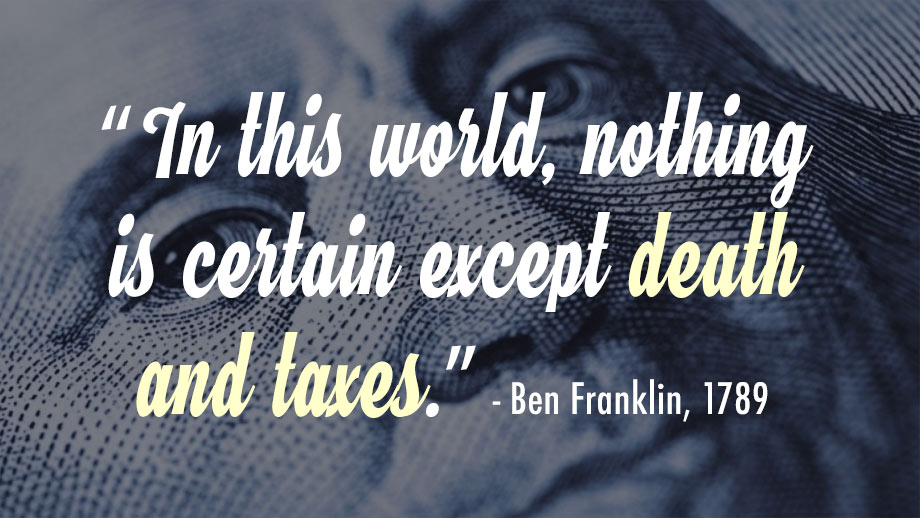
While it is certainly possible to delay paying taxes, Ben Franklin said it best:
via blackalliance.org -
Billionaires and Income Taxes

via The Times of India One of the questions that I get asked the most is why billionaires are allowed to pay so little in income taxes. After all, it seems like we don’t go a single day without some news outlet talking about how much the net worth of some billionaire increased and how small their tax bill is. So why is this allowed?
Simply put, they have very little income. For instance, Warren Buffett’s salary from Berkshire Hathaway was $373,204. So how is he one of the richest men in the world when his salary isn’t even enough to crack the top 1%?
Because his net worth includes more than just cash.
Net Worth vs Income
Most of us don’t think about net worth too often. It’s a phrase that we often hear and are vaguely familiar with, but would struggle to give the dictionary definition of. Quite often, the media uses net worth and income as though they are interchangeable. They are not.
investopedia.com defines net worth as “the value of the assets a person or corporation owns, minus the liabilities they owe.” In essence, it’s the value of everything that you own minus the debt that you have. Many people only factor in their bank accounts when considering net worth. You increase your net worth by earning money at work and saving it. Simple enough. There are, however, other aspects that must be considered.
- Appreciating assets: one way that you can increase your net worth is by owning things that increases in value. Generally, this something is either your house, the stocks and bonds that you own, or both. If your investment portfolio goes up in value by $15,000 and your house increases in value by $50,000, your net worth has just increased by $65,000.
- Paying down debts: Let’s say that you own a house worth $300,000 and you have a mortgage that you still owe $150,000 on. That house adds $150,000 to your net worth ($300,000 house – $150,000 of debt). As you pay down your mortgage balance, you are increasing your net worth.
As you can see, your net worth is influenced by a variety of factors, and your income is part of that equation, but not the whole thing. You can also spend income, but you can’t necessarily spend your net worth. If you get paid $500 for work, you can take that $500 and buy something with it. However, if the value of your house goes up by $500, you can’t use that $500 to buy something unless you either sell your house or take out a loan against your house. The IRS recognizes that distinction and for the most part, only taxes you on income, not every increase in your net worth. Let’s say that your house increases in value by $100,000, which increases your net worth by $100,000. If you had to pay income taxes on that, you would owe somewhere in the neighborhood of $25,000 to $40,000. Your bank account hasn’t changed as a result of this increase and you don’t have $20,000 lying around for something like that. The IRS realizes that this creates a very sticky situation for both you and them, so they only make you pay income taxes on your house when you sell it.
The same principle applies to other assets as well. For instance, if you own stock, you only pay income taxes on it when you sell it or receive some other type of income such as dividends. Most billionaires have their net worth almost entirely in the stock of their company and in other similar investments. When those investments increase in value, their net worth increases. However, this does directly translate to cash in their bank account. Warren Buffett can’t go into Dairy Queen and trade them $5 worth of Berkshire stock for a blizzard; he has to sell stock to get cash and use the cash to make purchases. If he sells that stock, he pays taxes on the gains (amount he sold it for – amount that he acquired the stock for). As long as he holds onto the stock and doesn’t receive dividends, he doesn’t have to pay taxes on it, and he also doesn’t receive any real financial benefit from it; the benefits come when he either sells it or receives dividends, both of which are taxable.
*Note that this does not factor in property taxes. Your property taxes will eventually rise if your house increases in value, but Buffett and co. also pay property taxes just like the rest of us – this post, as well as almost all of the talk about billionaires and their taxes, refers specifically to income taxes.*
-
Subscribe
Subscribed
Have a WordPress.com account? Log in now.

