-
Nobody is Judging You at the Gym
One of the most common things I hear about from people is that they’re afraid of people judging them at the gym, especially when they’re just getting started. It might be that they’re worried about looking like a weenie, or they might be worried about looking dumb if they’re doing an exercise wrong.
The thing is, almost everyone who goes to the gym is in the same boat that you are; they’re afraid of looking stupid, and they’re terrified of what other people think of them. In fact, they’re spending so much time worrying about themselves that they barely even notice that you’re there, much less what you’re doing. Even if you do something dumb, they either probably won’t notice, or they’ve already done the same thing.
One of the other things that people don’t realize is that the people who are seasoned gym rats are usually the nicest people in the gym. We all remember when they were first starting out and how scared we were. Regardless of where someone is in their journey, we all started from square one. We have all done exercises wrong, we’ve all farted during a set of squats, and we have all been the weakest/fattest person in the gym.
We also all have resting bitch face. If you walk through any gym, you’ll see filled with people who look like they’re waiting in line at the DMV. We instinctually avoid these people because they look like they’ll kill you if you get within 5 feet of them. However, that face has a lot more to do with concentration than it does with mood. I cannot tell you how many times I have seen someone with a full snarl on their face that melts into a smile when you ask them if they can spot you real quick or if they are using a piece of equipment.
I’ll leave you with a story. A few years ago, I was at the gym. A bunch of guys were there who I’m friends with now, but was either meeting for the first time that day or had only met once or twice previously. They were all MUCH stronger than me and in much better shape – 100% the guys who everyone is terrified of in the gym.
We all went through our workouts and chatted. Eventually, I was finishing up in the squat rack. I was about to start my last set of squats and I wanted to get 365lbs for a rep. One of the guys there, Brandon (the strongest one out of the whole group) saw me adding weight to the bar and offered to spot me. In my head, I thought to myself, “I just watched this guy squat 405 for so many reps that I lost count. I’ll probably miss the rep, he’ll pull it off my back, and he’ll do a set of bicep curls with it. FUCK!”
I settled in, and to my surprise, was able to hit the rep a lot easier than I thought, so I decided to try for a second. I struggled a bit with the second rep, but was able to finish the rep. I started to move forward to rack the bar, and Brandon said “Nah man, you’ve got another one in you. I’ve got your back.” I went for the last rep, and despite some struggling, was able to complete the rep. Not bad for someone who struggled to squat that weight for a single rep the prior week.
I racked the weight, and all of a sudden started getting bombarded with high fives and congratulations. To my surprise, the guys were celebrating my PR like we had just won the Super Bowl.
Not everyone who you talk to in the gym will be nice to you. Sometimes, you catch someone on the wrong day, and sometimes, they’re just an asshole. However, the vast majority of people you meet at the gym aren’t judging you, and either are in the same boat as you, or remember when they were, so don’t let the fear of looking like an idiot stop you from getting started, and don’t be afraid of the other people in the gym.
-
The Importance of Sleeping

via knowyourmeme.com We all know that sleep is important, but we often don’t give it enough respect. Getting enough sleep can provide a ton of benefits, and not getting enough can take a huge toll on our bodies. So what are some of those effects?
Recovery from workouts: When you workout, you are creating small amounts of damage, which your body then repairs. When your body is done repairing the damage, you come back better than ever. However, sleep is a huge part of that recovery process. Giving your body insufficient sleep means that you won’t recover as quickly or as well, which is a massive hindrance to your fitness progress. You also will have less energy during your next workout.
Mood/mental health: Not getting enough sleep sleep has been found to increase levels of stress and depression, especially when lack of sleep is chronic. In addition to this, when we are sleep deprived, we tend to turn to caffeine as our savior. The problem is that caffeine tends to raise increase stress hormones even further. These hormones will also cause your body to start retaining fat and burning muscle if left unchecked, which only makes your fitness journey more difficult.
Eating: Lack of sleep has been found to cause increased hunger, which causes you to eat more. If you are trying to watch your eating, increased hunger makes it more difficult to cut calories. I quite often hear from people who have put on weight recently and can’t figure out why. Quite often, their sleep schedule has been disrupted by something like a new baby, work, or construction going on. They also usually have developed an inexplicable craving for things like ice cream and cookies at the same time. Once they get their sleep schedule back under control, the weight and the cravings tend to recede.
Immune system: Getting sick sucks. Getting sufficient sleep increases your immune system’s ability to fight off sickness, which means that both you’ll get sick less and and recover faster.
Lower risk for health problems: Lack of sleep can increase your risk of heart problems substantially. People getting less than 6 hours of sleep per night have been found to have a 20% greater risk of heart attacks. In addition, heart attack risk has been found to increase 20% during the week after Daylight Savings and it is presumed to be a result of disrupted/decreased sleep schedules from Daylight Savings.
Mental clarity/focus: When you’re running on insufficient sleep, your brain doesn’t work as well as when you are getting enough sleep. It might be things like making simple mistakes at work or school, or it might be things like leaving the stove on or getting into a car accident. Daylight Savings has been linked to a roughly 6% increase in car accidents, and it is thought to be a result of disrupted/decreased sleep schedules from Daylight Savings.
As you can see, sleep plays a massive role in your health. Regardless of whether you are an early bird, night owl, or an average joe, make sure that you are getting enough sleep: the CDC recommends between 7 to 9 hours. It may be boring, but it could save your life.
-
How I Saved $243 on a Flight to Hawaii

First off, for those of you who don’t know, Rakuten is a website that offers cash back at various businesses, from stores to hotels to restaurants. They get a commission from these businesses for getting you to shop there, and they then pass some of that commission on to you to encourage you to shop at that business.
The deal:
Rakuten is currently offering a 90% cashback rate on LifeLock purchases made through the Rakuten portal. If you just buy LifeLock, you get 90% of your order (minus tax) back into your Rakuten account, which is then paid out as a check or deposited into your PayPal account. However, Rakuten also offers the choice to get your cashback in the form of Amex points at a rate of 1 point = 1¢. If you use your Amex points for travel, it is pretty easy to get a lot more than 1¢ of value out of each point. The value you get varies greatly depending on how you use them, but the general consensus for valuing Amex points is a minimum of 1.5¢ per point.
So what did I do?
Using the Rakuten portal, I bought the year-long LifeLock Unlimited Plus Family plan for $467.88 ($497.59 with taxes. I then got 42,109 Amex points back (90% of 467.88), which are worth about $631.64 at a 1.5¢/point valuation. I had to pay off the $497.59 on my credit card, but I was able to transfer 40,500 points to Delta and to book a flight from JFK to Honolulu for 40,500 points + $12. That would have cost me $753 if I had paid cash, so I saved $243.41 ($753 flight – $497.44 LifeLock -12 airline fee) and still have 1,609 points left. The fine print on Rakuten specifies that you don’t get cashback if you cancel within 60 days or if it is an automatic renewal, so I’m going to cancel LifeLock from auto-renewing somewhere between 60 days and a year from now to avoid the charges.
One of the benefits of this deal on top of saving money on my flight is that I got LifeLock too. I don’t know that I would pay full price for LifeLock, but it doesn’t hurt to have because it offers benefits like monitoring your credit score and reimbursement for stolen funds (as well as other benefits, depending on which plan you get).
As a bonus, if you sign up for Rakuten here and spend $30, you will get an extra $30 back, which only adds to your savings.
If you have no plans to travel anytime soon and are cash-strapped, this might not be a great idea for you. However, if you are planning your trip, it’s worth exploring how much the Amex points will be worth for your trip. This deal comes and goes frequently, so don’t worry if Rakuten is offering less than 90% and don’t feel like you have to make use of this deal right now or it will disappear forever.
*Don’t have an Amex account? Check out our review of the Amex Gold card and the Amex Platinum card!*
-
Eating

One of the most under-appreciated but critical components of fitness is nutrition. I have run across more people than I can count who are frustrated because they work their ass off in the gym, but don’t make any progress because they aren’t eating right.
Be aware of what you eat. You don’t have to know to the gram how much protein you’ve had; just make a list of what you eat and how much of it you eat. Include everything, even the handful of chips that you had while you were waiting for your food to finish cooking. Often times, it is the little things like snacks and sauces that can make or break your nutrition.
Read nutrition labels to get a sense of the nutritional and caloric makeup of different foods that you eat. If you have a rough idea of how many calories are in something, it makes a huge difference. You’ll be surprised by some foods as well, and might even find that some foods are healthier than you thought.
Think about what aspects of your diet are probably not what they should be. You probably have a pretty good idea of at least a few things that you should be doing to get better results. It might be the donut that you get every morning, or that you don’t eat enough protein, or that you use cheese like its own food group. Cutting down on these things can often make a huge impact with relatively little effort.
Total daily energy expenditure (TDEE) is the amount of energy that your body uses in a day. You can use a TDEE calculator like this one to get an idea of what your TDEE is. It is not a perfect gauge, but it can help to give you an estimate of how many calories you should consume in a day. You can then adjust accordingly based on your goals.
Make sure you’re getting the right amount of calories. Both overeating and undereating will cause problems for you. We all know that eating too much will hinder fat loss. However, if you don’t eat enough, it can cause your metabolism to slow, which makes it harder for you to burn fat, as well as causing other issues like fatigue and muscle wasting.
Get plenty of protein and be sure that you’re eating foods that are mainly protein, not foods that simply contain protein. A lot of people talk about how they get protein in their diet from things like peanut butter and rice and beans. The problem is that while these things contain protein, they are not an efficient source of protein. Peanut butter contains a lot of fat, and rice and beans contain a lot of carbs, so if you are trying to reach your daily protein intake by eating those things, you are going to get a lot of extra fat and carbs, which will throw off your diet. However, if you get your protein from things like meat and eggs, you are getting a lot more protein with a lot less fat and carbs, so if you are looking for protein,
Make sure you’re getting fats and carbs in your diet as well. Your body uses fats and carbs for it’s normal functions, so if you don’t consume enough of these, you will run into problems. Your body uses carbs as it’s main source of energy. It uses fats for things like storing energy and providing insulation. Fats also act as messengers and are involved in the chemical reactions that help control growth, immune function, and reproduction.
Figure out what your goal and stick with it. If you want to shed a few pounds, stick to that and don’t try eat and train like you’re trying to trying to add 10lbs of muscle. If you’re trying to get stronger/add muscle, you’re going to put on some extra fat too – that’s a part of the process. If you eat like you’re getting ready for swimsuit season, you’re going to have a very difficult time getting bigger and stronger.
Finally, remember that the best plan is the one that you’ll stick to. I have worked with tons of people who try out diet plans that are made up of foods they hate, so they never follow the plan. I also know a ton of people who try to be absolutely 100% perfect with their nutrition by skipping dessert at parties, and they end up burning out after a while. If you have a slice of cake at someone’s birthday party, you aren’t going to ruin all of your progress. If you follow your plan most of the time, you should be in good shape, so don’t be afraid to live a little.
-
How to Travel if You Can’t Afford It

One of the things that I hear the most from people is that they want to travel more, but their budget is too tight. Even when money is tight, there are a few minor things that you can do to supersize your travel budget.
Credit cards that offer cashback or rewards points can be a great way to add money to your travel budget. Cards like Bilt Rewards (1 point per dollar spent on rent, 2 points per dollar on travel, and 3 points per dollar on dining), the Amex Gold (4 points per dollar on groceries and restaurants), and the Capital One SavorOne (3% cash back on dining, entertainment, popular streaming services and at grocery stores, plus 1% on all other purchases) all offer rewards on certain spending categories that can be used for travel. Let’s say that you live in an apartment that costs $2,200/month and you spend $300/month at restaurants. Just this spending will net you 26,400 rewards points from rent + 3,600 from restaurants, which is worth roughly $450 (depending on how you use your points). While that isn’t going to get you a week in the Maldives, it’s still $450 more for travel just by spending your money how you would it anyway. You can also pair these with travel cards like the Amex Platinum or the Capital One Venture X to get even more rewards when you travel. (For reviews on these cards, click here).
Cashback portals like Rakuten can be a great way to save money on the things that you’re planning to purchase. If you can save money on some of the purchases that you make, it can add up quickly, and you can use it to fund your travel. Rakuten offers Amex points as one rewards option, which can then be transferred to travel partners like Hilton and Marriott, or Delta, American Airlines, or British Airways. Rakuten also has a dining program that gives 5% cashback or 5 Amex points at many restaurants on top of the cashback that you get from your credit card. Pairing this with the Amex Gold nets you 9 points/dollar (worth roughly 13.5¢ per dollar total), and the SavorOne nets you 8% cashback total.
Many loyalty programs offer free nights on rewards stays that are booked entirely with points and higher earnings rates for loyalty program members that increase with higher status levels. For instance, because I get Hilton Diamond status through my Hilton Aspire card, I earn 34 Hilton points/dollar spent at Hilton, (10 points for being a Hilton Honors member, 10 additional points because of the 100% match for Diamond members, plus another 14 points by paying with my Aspire card). I also get complimentary room upgrades, which allows me to get much nicer rooms for the price of a standard room.

American Airlines rewards rates for different status levels
via nerdwallet.comBuying points can be a good investment if there is a sale, especially if using points can save you money via lower room rates or free nights. For example, Hilton is offering 2x points up to 160,000 points until May 6th, which comes out to a cost of 0.5¢/point, which is typically below the value of the points, depending on how they are used. Let’s say that you want to book an night stay at Homewood Suites by Hilton in Miami. You can get a suite with 2 queen beds for 40,000 points/night or $238/night. If you use points for the entire stay, you get the 5th night free, so it brings your cost down to 35,000 points/night. If you buy the points for 0.5¢ each, you end up paying $175/night and save yourself about $63/night. However, points are not always the cheapest way to book, so you’ll want to do the math before you make a decision. You can find the different rates by going to the hotel’s website and checking the “use points and money” box to see the daily rate using points.
Many credit cards will periodically offer transfer bonuses, like getting 40% more points when you transfer points from American Express to British Airways or 30% more when you transfer to Hilton. If you have a specific trip in mind and some credit card points saved up, this can be a great way to get more bang for your buck.
Many credit card companies also offer discounts for certain companies. For instance, you can get 6% back on VRBO from Capital One via their discounts page, or save $80 if you spend $200 with JetBlue from American Express. Making use of offers like this, both for travel and your everyday spending, can boost your travel budget.
Lastly, you can save money in other areas of your life by doing things like making your coffee/food at home and prioritize traveling. Little things that you do often tend to add up over the course of a year, so if you can make a few minor changes, you can save a ton. For instance, if you spend $7 at Dunkin or Starbucks on your way to work, that adds up to $1,680 per year! For more on this, check out our guide on how to save money.
Each of these tricks individually probably isn’t going to be enough to get you a phenomenal travel budget. However, if you string a few of them together, there’s a pretty good chance that you can start becoming a regular at the airport.
-
My Stretching Routine
As we established in the previous post, stretching is important. So what stretches should you do?
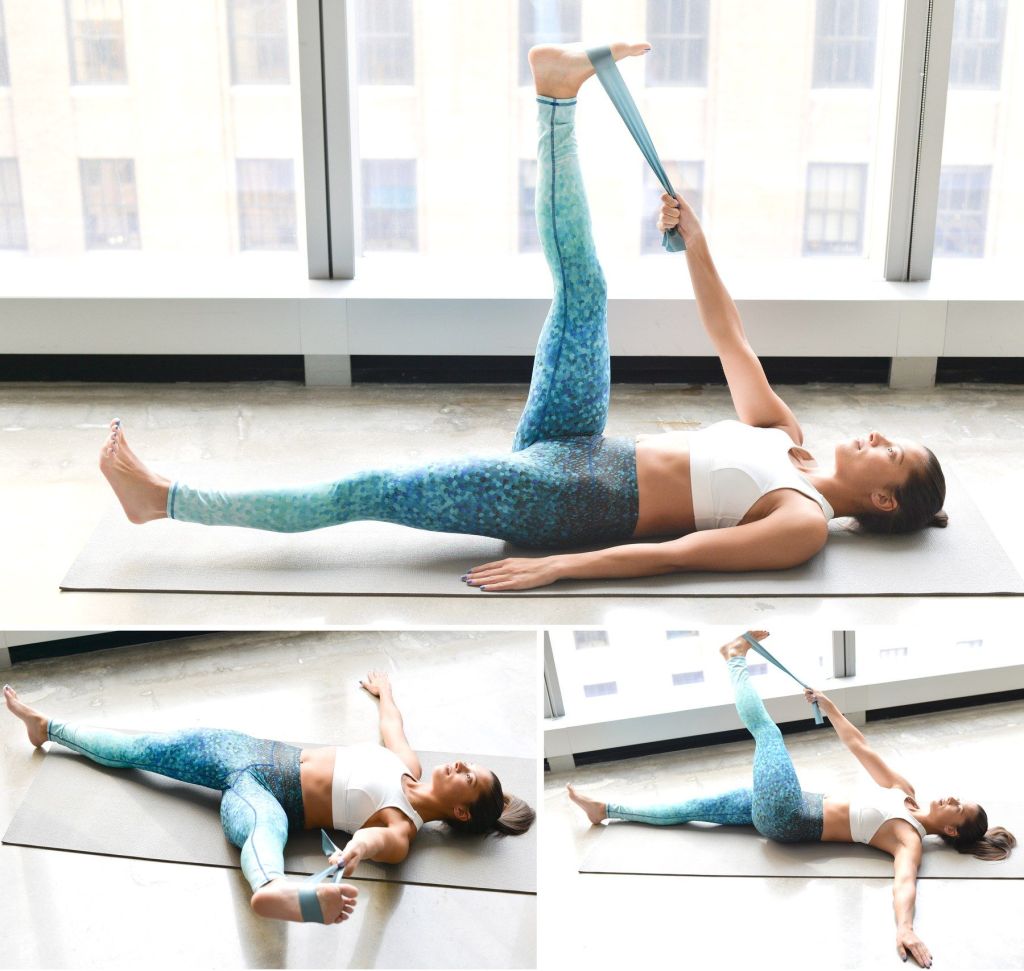
via pinterest.com If you’re going to do one stretch every day, I recommend making it this sequence. You start by lying down on your back and tucking a stretch strap (I recommend this one) underneath the arch of your foot. You then use the strap to pull your foot towards your face. You should feel this stretch in the middle of your hamstrings. Hold for 60 seconds.
Once 60 seconds is up, bring your leg out to the side and use the strap to pull your foot away from your body (like in the bottom left picture). You should feel this stretch in the area that runs between your knee and your groin. Hold for 30 seconds.
Once 30 seconds is up, bring your leg out to the other side and use the strap to pull your foot across your body (like in the bottom right picture). You should feel this stretch in your glutes and lower back. Hold for 30 seconds.
This stretch will help loosen up your glutes, which will help relieve and prevent lower back pain. I hold this stretch for about 60 seconds per leg.
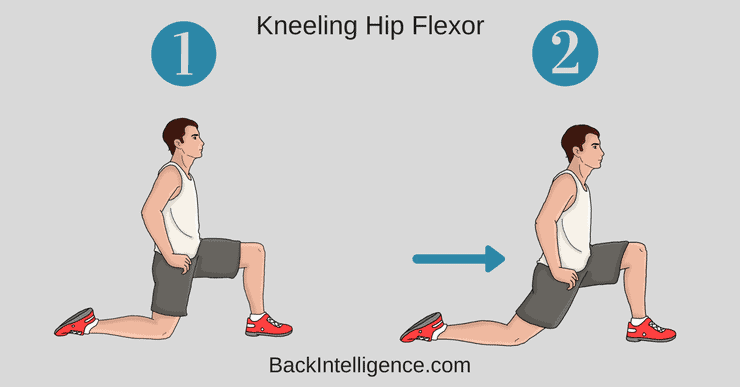
With this stretch, be sure to keep your lower back and chest upright. It is common for people to lean their torso backwards too far, which causes their lower back to arch. Your hips should be the only thing that comes forward. I hold this stretch for about 30-45 seconds per side.

While in the same position from the hip flexor stretch, start leaning over to the side. Make sure that you are just leaning to the side, not forward. This will stretch your psoas, which you will feel in your lower back where the psoas connects. I hold this stretch for about 30 seconds per side.
This stretch is a good beginner quad stretch. If your knees bother you when you do it, you can tuck a towel or sweatshirt behind your knees to help ease the strain on them a little bit. You should feel this stretch in your quads and hip flexors. Hold for 60 seconds.
via popsugar.com Once you can do the beginner quad stretch easily, you can try this stretch to better stretch your quads. Be sure to lean back so that your butt is touching your ankle to better target your quads. Hold for 30 seconds per leg.
Sit with legs spread out in a V shape. Sit up tall (don’t slouch forward or backward) and then lean over and try to touch your left hand to your right foot. You should feel this in your lower back. Hold for 30 seconds per side.
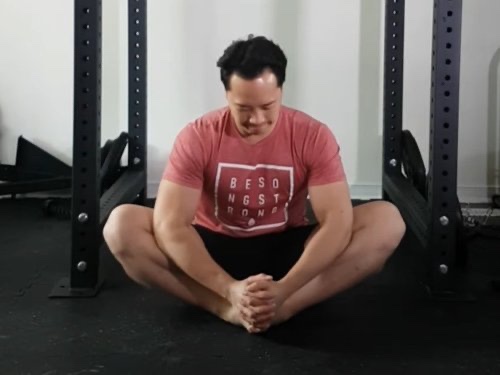
Via Rehab Hero Sit on the ground and put the soles of your feet together. Use your hands to pull your feet closer to you and use your elbows to push your knees down towards the floor. Hold for 30-45 seconds. This will help loosen your hips, which in turn helps with knee pain and mobility issues.
This stretch will help loosen up your upper back to relieve/prevent neck pain after a long day of sitting or doing back exercises. Hold for 30 seconds per side.
This stretch will help loosen up your chest and shoulders to fix your posture after a long day of sitting or doing chest exercises. Hold for 30 seconds per side and be sure to adjust the height of your hand placement so that you stretch both your chest and shoulders.
This stretch will help counteract the tension from walking/running and from doing calf raises. Hold for 30 seconds each side.
There you have it; my daily stretch routine that I use for both myself and my clients. I encourage people to stretch every day because if you work hard, you make progress, and if you slack off, you lose that progress that you fought so hard to make. If you make enough progress, aches and pains will start to disappear. However, if you stop stretching for too long, those aches and pains will be back like they never left.
-
Stretching
Stretching is a low-hanging fruit that most of us can get with ease. You can do it with little to no equipment, and you can get a good stretch in about 10 minutes. I can recommend some stretches that have helped me and the people who I have worked with, but the biggest obstacle to stretching is that stretching isn’t fun. It’s uncomfortable, and it takes some effort if done properly. However, stretching regularly can also have a huge impact (for the better!) on your life. Proper and regular stretching can have effects like greatly reducing/eliminating pain and stiffness, reduced risk of injury, improving posture, and helping your form with certain exercises, which allows you to lift more weight.
I have had a ton of clients come to me and talk about various injuries and joint problems, only to discover that stretching regularly fixed their problems. I’m not saying that this is always the case; however, I have yet to run across someone who did not benefit greatly from stretching more. The reason why so many people mix up injuries and joint problems with tight muscles is that they feel almost exactly the same. For instance, one of the things that almost everyone I talk to mentions is knee pain when they squat or do lunges. While this can be can be a sign of bad knees, it is more commonly a sign of tight leg muscles like your hamstrings or quads. When these muscles are tight, it can cause your kneecap to get pulled up against the bones around it, and produce a grinding feeling.
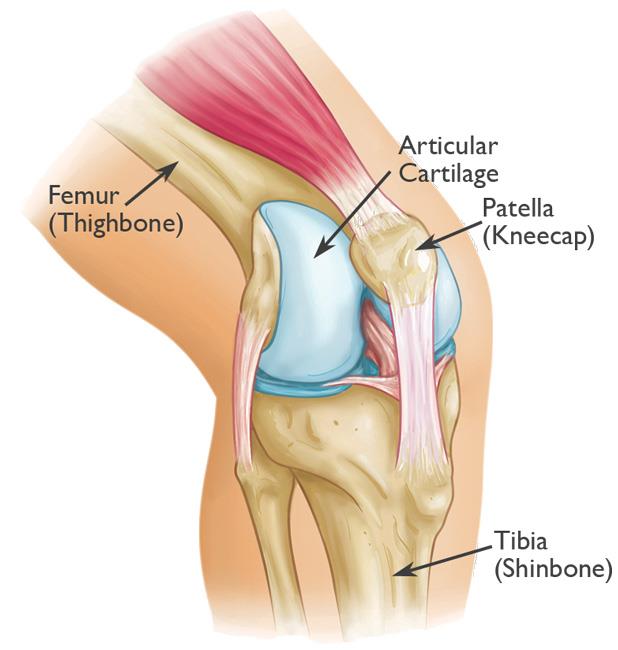
When certain leg muscles are tight, they pull your kneecap up against the surrounding bones, and cause a grinding sensation. Stretching helps reduce and prevent this. via orthoinfo.aaos.org Stretching also helps with muscle soreness, both as a result of exercise and in general. When you use your muscles, they contract (tighten) in order to pull your bones in the direction that you want to move. The problem is, after extended use like a hard leg workout, a jog, or a workday filled with sitting, your muscles stay partially contracted, aka muscle tightness. When your muscles are tight, they hurt. It might be a sharp pain when you move a certain way, or it might be a dull pain, like when you try to go down the stairs after leg day. In both cases, stretching will almost certainly help ease the pain.
Avoiding injuries is an important aspect of fitness, and one of the best ways that you can do that is to stretch tight muscles. Take a rubber band and stretch it out just enough to feel a bit of tension on it. Pluck it like a guitar string. Now, stretch it out as tight as it will go, and pluck it again. Which scenario do you think is more likely to break the rubber band? Your muscles work in much the same way; if they are tight, they are more likely to break, which is how you get injured.
Injuries can also happen as a result of poor form when exercising, and having tight muscles often causes poor form because your muscles aren’t loose enough to allow you to move in certain ways. Let’s use squatting as an example. In the below pictures, we see an improper squat that increases the risk of injury, and a proper squat that reduces the risk of injury.

Improper squat form: rounded back and low torso, weight coming forward onto toes, lack of depth via powerfullyyoufitness.com Proper squat form: straight back and upright torso, weight on her heels, plenty of depth via sweat.com The problems that the first squatter has are all typically caused by either weak muscles, tight muscles, or both. Getting into the proper squat requires loose hamstrings, glutes, and quads (at minimum).
Fixing your exercise mechanics doesn’t just reduce your risk of injury; it also helps you lift more weight. Using proper form allows you to move in a more efficient way, so you can get more results with the same amount of effort. You might not think that it makes a big difference; however, I used to squat with form that resembled the first picture. I took some time to fix my form, and went from struggling to squat 405 lbs for a single rep to being able to squat it for 10 reps.
Stretching isn’t fun. There is no question about it. However, if you do it consistently, it makes a huge difference to your life for the better. Here at Bored Man Gets Paid, that’s what we’re all about.
-
Rogue RML-690 Power Rack
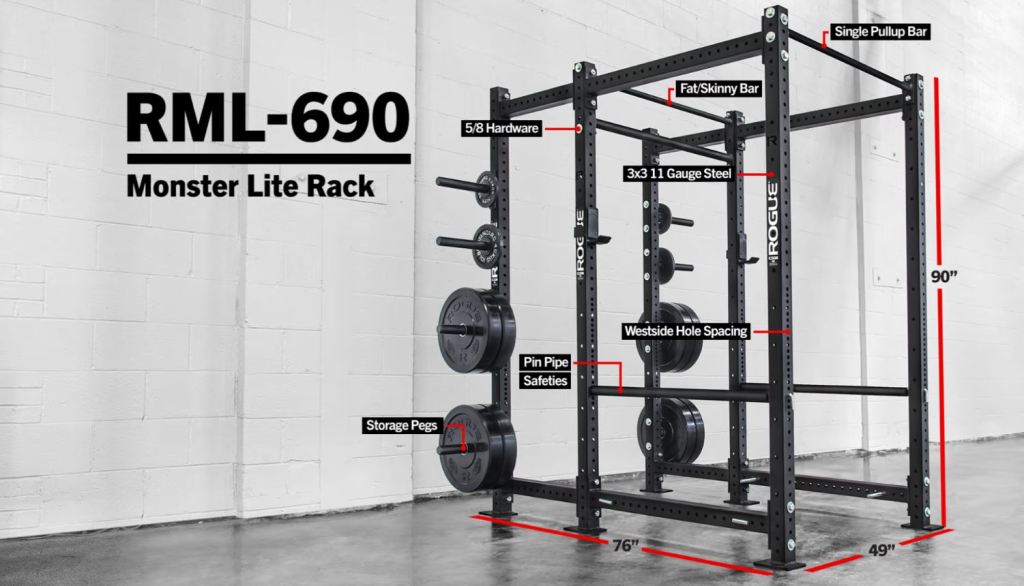
Having a proper power rack is essential for anyone who is serious about weight training. They can be combined with attachments like cable pulleys and pullup bars to offer you a bunch of different ways to train. More importantly, however, they offer you protection by acting like a spotter when you’re doing lifts like squats and bench press.
I have used my fair share of power racks and because of both the cost and the importance of choosing the right rack for myself, I took my time when deciding on which rack I would buy. Two years later, I could not be happier with my decision.
The main reasons why I chose this rack in particular are the size and strength of it and the fact that Rogue doesn’t require you to bolt it to the ground.
As someone with some experience squatting and bench pressing, I knew that I would need a solid rack. I have had a few close calls with cheaper racks almost tipping over when I re-rack the bar, so I wanted to make sure that I wouldn’t have to worry about that, especially as both myself and my clients start using heavier weight. It’s not too big of a deal if you re-rack 135 a bit too hard, but as I have come close to learning the hard way, when you’re amped up and slam back a 400-500 bar, having the wrong rack means that the EMTs are going to need a spatula to get you off the ground.
Almost all of Rogue’s power racks say in the details that they must be bolted to the floor, which wasn’t something that I was thrilled about doing. I did a bunch of research into different ways getting around this, like building a platform underneath it to bolt to, but this approach got mixed reviews. However, in one of the forums I read, someone mentioned that you don’t need to bolt down the RML-690 rack because it has six legs instead of four, and weighs in at 530 lbs, making it far more stable than its lighter, four-legged competitors. A quick check of the Rogue website confirmed that this is indeed the case.
Two other things that I really appreciate about this rack are that I can store my plates on the back side of the rack (as seen in the picture), which gives me more space to maneuver than in a four-legged rack. I also find myself using all three pullup bars fairly often because I have a cable pulley that hooks to one of the bars and often have group workouts that involve pullups.
The setup for this rack wasn’t too difficult, but it took a few sets of hands, especially for the last few steps (combining the pair of three-legged halves of the rack). The box of nuts, washers, and bolts for this rack was roughly 40 lbs, so if you use a wrench for this, it will take you a while. I highly recommend using an impact gun. Once assembled, the rack sat perfectly flat, and with the exception of a few chips in the paint from shipping (which I mentioned to Rogue and they refunded the shipping costs), the paint and the rest of the rack have held up immaculately.
If you are comfortable bolting down your power rack, there are cheaper racks that will still get the job done. At $1,775, this is one of the more expensive racks out there. However, if you, your landlord, parents, or significant other aren’t too keen on having to bolt a rack into concrete, I highly recommend the Rogue RML-690 Power Rack.
-
Saving Money

Saving money doesn’t have to be super difficult; it just requires a little bit of self-awareness and a quick look at your finances.
I have gotten a ton of questions/comments from people about how they wish that they could save more money, either to shore up their finances or to be able to afford something that they really want, like a trip or a new computer. The way that I always explain it is that you want to figure out how to maximize the enjoyment that you get out of each dollar that you spend. This means that you’ll have to understand what you really enjoy, what is sort of “meh” to you, and what you really dislike, and then cut your spending to the latter two categories.
Once you have this list, you can figure out how to better allocate your spending so that your money is going to the things that you love, rather than the things that you don’t. For instance, if you are a huge foodie but you don’t care too much about the gym that you go to, get a Planet Fitness membership instead of Equinox. I personally am the opposite; I have approximately 3 taste buds, and they all love beef, so I usually get “The Burger” at every restaurant that I go to (the most standard hamburger that they offer, no BS that’s going to cost me extra), with a side of fries and a tall glass of ice water because if I want a beer, I’d rather get one for $2 from the store instead of $9 from the restaurant. This may not sound like it adds up, but when you go out for dinner once a week, that $15 or so that I save comes out to almost $800/year. I also make my coffee at home instead of going to Starbucks, which saves me another $1,300/year or so. I can then take that $2,100 and blow on new workout equipment for my home gym.
So how do you know what you’re spending your money on?
Chances are, you already know at least a few of the things that you should cut your spending on. It might your daily “coffee and a sandwich” stop, it might be the random stuff that you buy on Amazon but don’t really need, or it might be the Stitch-fix membership that is filling your closet with clothes that you really want to love but don’t quite compare to yoga/sweat pants and a hoodie. If you aren’t sure, keep track of all of your spending for a month. If you pay for everything on your credit card, you can check your statement for all of this info. Go through that list and categorize everything based on how you feel about it.
Whether or not you spend money on something also does not have to be a black-and-white answer; if you can find a cheaper alternative to something, that is great too. For instance, I rarely go to Starbucks, but I found that getting the cheapest coffee I could find at the grocery store made me feel a bit dead inside. So what did I do? I started switching up the coffee that I buy so that I can still feel like I’m treating myself. I buy big bags of Black Rifle coffee that I use during the week because I want to have a higher quality coffee, but I usually don’t have the time to savor my weekday coffee. For the weekends, I buy specialty coffees like Drive coffee and try different blends because I tend to have more time to savor and appreciate the taste. I also get whole beans when I buy the specialty coffees and grind them by hand so that I get the full experience of the coffee (as well as getting some forearm work in because the grind never stops *pun absolutely intended*). Is it a bit more expensive than buying Maxwell House? Absolutely. But 75¢ per day is a heck of a lot cheaper than $5 per day.
My point isn’t that you should obsessively track your spending; you just want to be aware of it so that you can prioritize the things that you love the most. Once you get some practice at this, it becomes a lot easier to do, and you can quickly figure out whether or not you should buy something.
-
Why We Do Cardio
Cardio is simultaneously the most over-used and under-used aspect of working out. If you walk into most gyms, you’ll probably see a bunch of people slogging away on a treadmill for a few hours, and a bunch of other people who think that cardio means lifting weights faster. For most people, the sweet-spot is somewhere in the middle. Doing too much cardio can cause problems like joint problems, fatigue, muscle loss, and decreased metabolism. Too little cardio can lead to increased risk of cardiovascular and respiratory problems, as well as hampering your fat loss and strength training.
So what’s the point of cardio?
First off, it helps improve your cardiovascular (heart and blood) and respiratory (lungs) systems. This makes you less likely to have health issues like strokes, lung cancer, type 2 diabetes, and heart disease. Yay!
It also helps you to increase your overall conditioning, which in turn helps with things like improving other areas of your workout and making the daily tasks in your life easier. Perhaps the best part though is being able to establish dominance over your coworkers by taking the stairs without sounding like you’re going into cardiac arrest.
Just like with weight training, there are a lot of different ways to do cardio. We will get into each of these, and explore how to do them, when to do them, and why to do them.
-
Subscribe
Subscribed
Already have a WordPress.com account? Log in now.
 Seaotter Fitness