
As you may have noticed, gas prices tend to change a lot and change incredibly quickly. So why does that happen?
The biggest reason for this is that the oil industry and the global economy moves in cycles. Just like the stock market moves in cycles (which you can read about here), the oil market also moves in cycles. Each stage of the cycle plants the seeds for the next stage, and right when we forget that the cycle exists, we get a sharp reminder as we transition into the next stage.
So what are these stages?
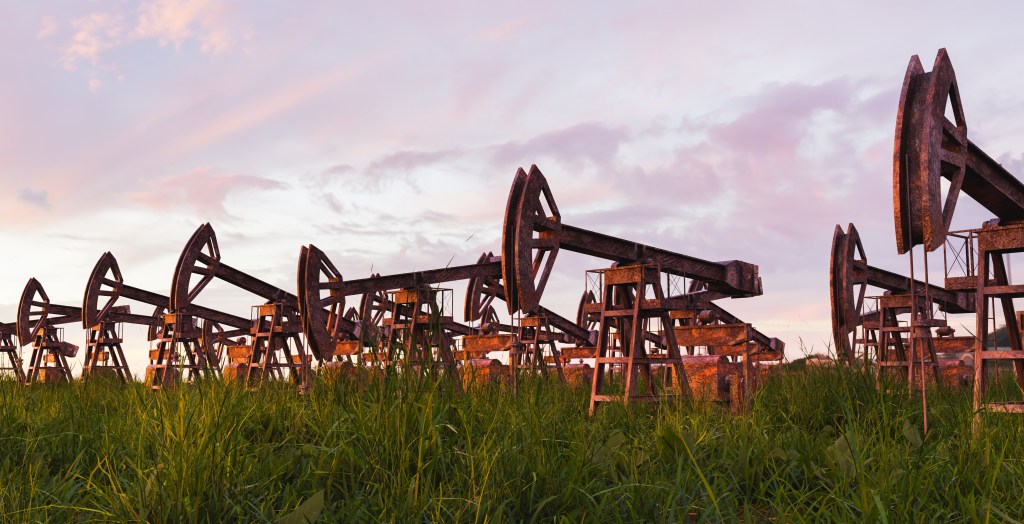
The oil market tends to follow a cheap -> expensive -> cheap -> expensive cycle. This is because when oil prices are too low, oil companies have to cut back or face bankruptcy. Employees get laid off, new exploration is halted, and expensive projects get shut down. This results in less oil being pumped out of the ground and sent to markets. When this happens, people still need oil, so prices tend to rise because there is less oil to go around. As prices rise, the oil industry begins to come back to life. Employees get hired back, the existing wells are milked for everything that they’re worth, and new oil wells are sought out. As prices climb even more, more companies start popping up, and more money gets poured into finding more oil, and eventually, this flood of new oil reaches the market and pushes prices back down. Eventually, prices get so low that the oil industry cuts back, bankruptcies and layoffs begin, and the cycle starts over again.
A significant factor in oil prices is technology. Technology can push oil prices both up and down, depending on the technology. For instance, when the world began converting from being coal-powered to oil-powered, it created an astronomical demand for oil. All of a sudden, the oil industry had customers that included governments of most of the global superpowers, and their needs were massive. This change hit just before the onset of WWII, which only exacerbated the need for oil as oil-powered ships, submarines, airplanes, and tanks slugged it out across the globe. In the end, the Allies were able to win largely by cutting off the Axis powers from oil, rendering their militaries useless.

Technology can also push oil prices down. This can be things like breakthroughs in reducing oil consumption (hybrids, etc.) or in increasing oil production. One of the best examples of this during recent history is horizontal drilling and fracking. In the mid 2000s, advances in horizontal drilling and fracking allowed oil companies to begin to extract oil that was previously unreachable. All of a sudden, oil and gas flooded the market and in the mid 2010s, prices collapsed.
One of the other reasons for the cycle is that not all oil is created equal. Some methods of extracting and refining oil cost more than others. For instance, all else being equal, it is more difficult to extract oil from the bottom of the ocean than in the middle of Texas. This difficulty means that it costs more to get that oil. As a result, oil prices have to be at a certain level for companies to start utilizing those methods. As oil prices rise, companies start tapping into the more expensive oil production methods, and more oil gets to the market. On the flip side, those projects get cut when oil prices fall and they are no longer profitable, which decreases the amount of oil that is getting to the market, planting the seeds for the next stage of the cycle.

These cycles are not new. In the late 1800s, a young bookkeeper began to dabble in the oil business. He started with refining, and began to expand into other areas of the oil industry. He was able to leverage his knowledge of the oil industry’s cycles to not only survive the downturns, but to take advantage of them and grow his business. In time, the business would come to be known as Standard Oil, and it’s founder, John D. Rockefeller, would become the richest man in the United States.
Rockefeller was well-known for his views of the oil industry’s boom and bust nature; namely, his desire to put an end to the cycles and create a more stable industry that would benefit both companies and consumers. Rockefeller’s approach was to build up a huge supply of cash when oil prices and profits were high, and then use that cash and any and every loan that he could get to buy out competitors when times were tough. He also would flood the market to drive down prices when he needed to, and in time, built up a stranglehold on the industry by controlling every part of it. He had arrangements with the railroads that got him discounts because of how much business he provided, he controlled the pipelines, refineries, drilling sites, and distribution centers. He used this stranglehold to try and stabilize the industry so that companies and consumers could have stable, predictable oil prices, rather than facing the wild gyrations that caused so much disruption. Rockefeller and Standard Oil were relatively successful at stabilizing the industry for decades, but the breakup of Standard Oil and the growth of the oil market from a national to an international one broke Standard Oil’s control.
Alas, the more things change, the more they stay the same. The cyclical nature of the oil industry persists, and just as Rockefeller fought to stabilize the oil markets in his day, many of the world’s governments now fight the same fight. Many countries produce oil, and they fight amongst themselves and with their customers to make the largest possible profit. Alliances like OPEC+ are formed, and agreements are signed and then circumvented when there are profits to be made. As we have seen between early 2020 and now, the world alternates between having oil gluts and oil shortages, just as it has since Edwin Drake’s discovery in Titusville, PA. Just like in the stock market cycles, the root cause for these boom and bust cycles is the fear and greed cycle that is inherent to human nature, and will likely continue as long as humans use oil.
 Seaotter Fitness