Many of you have probably read/seen Harry Potter and the Deathly Hallows. For those of you who haven’t or don’t remember the origin story of the deathly hallows, check out the video below.
As we see in the Deathly Hallows, the three brothers each take different paths in life, but in the end, Death gets all of them. The same thing applies to taxes.
While America (and much of the rest of the world) almost exclusively focus on income taxes in tax policy discussion, there are many other taxes out there. Property taxes, capital gains taxes, estate taxes, sales taxes, etc. all contribute tax revenue and are used to shape society in the United States.
The dynamic between billionaires and the IRS often the same as the brothers and Death; You may get taxed sooner, you might get taxed later, or you may get taxed when you die, but in the end, the Tax Man always gets his dues.
Wait? How can you get taxed when you’re dead?
Estate taxes.
Estate taxes are paid when someone dies and passes the things that they owned on to the next generation. We don’t often hear about estate taxes because they only apply to multimillion dollar estates, and although capital gains taxes apply to more people than estate taxes, they are often ignored in favor of income taxes.
Three brothers all start businesses. Their businesses grow, and their stock grows to be worth $10 billion. The first brother decides that he has had enough of his business and wants to cash out and retire. He sells all of his stock in the business and gets $10 billion in cash. Because he has owned that stock for more than a year, the money that he gets from the sale is taxed as long term capital gains, and he pays the Tax Man about $2 billion as a result of selling his stock.
The second brother sees the first brother spending his money on fun things and decides that he wants to get some money out of his business. He would rather receive a steady payment than one large payment, so he goes to the board of directors for his company, and they agree to start paying dividends to the people who own stock in the company. Every year, the brother receives 10% dividends on his stock, or $1 billion. Every year, the Tax Man comes for his cut of the brother’s dividends: about $200 million per year.
The third brother loves his company dearly, and does not care about the money the way that his brothers do. He continues to own his company’s stock and instead of advocating for dividends, he believes that the money should be kept within the business so that it can continue to grow. He grows old, and decides to leave the business to his kids. When his time finally comes, he leaves his $10 billion of stock to his kids, and after a lifetime of minimal taxes, he greets the Tax Man like an old friend and gives him his cut: $4 billion.
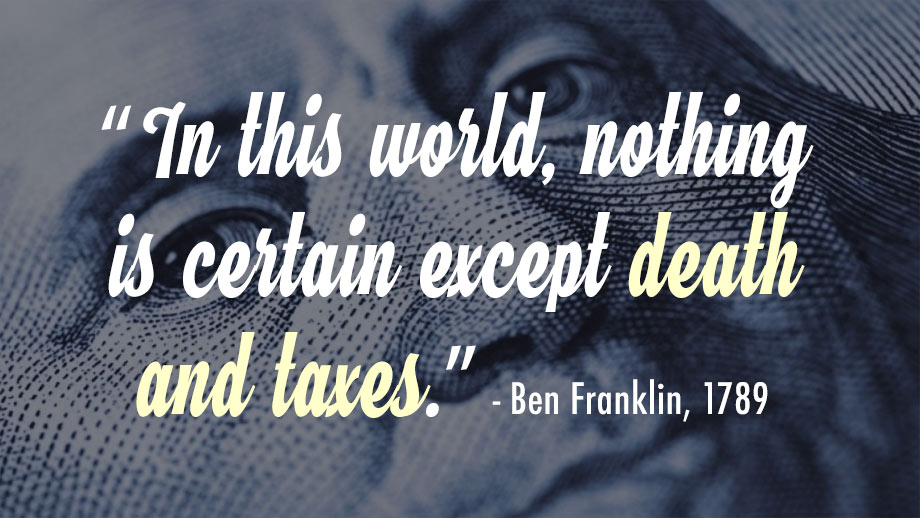
While it is certainly possible to delay paying taxes, Ben Franklin said it best:
 Seaotter Fitness